


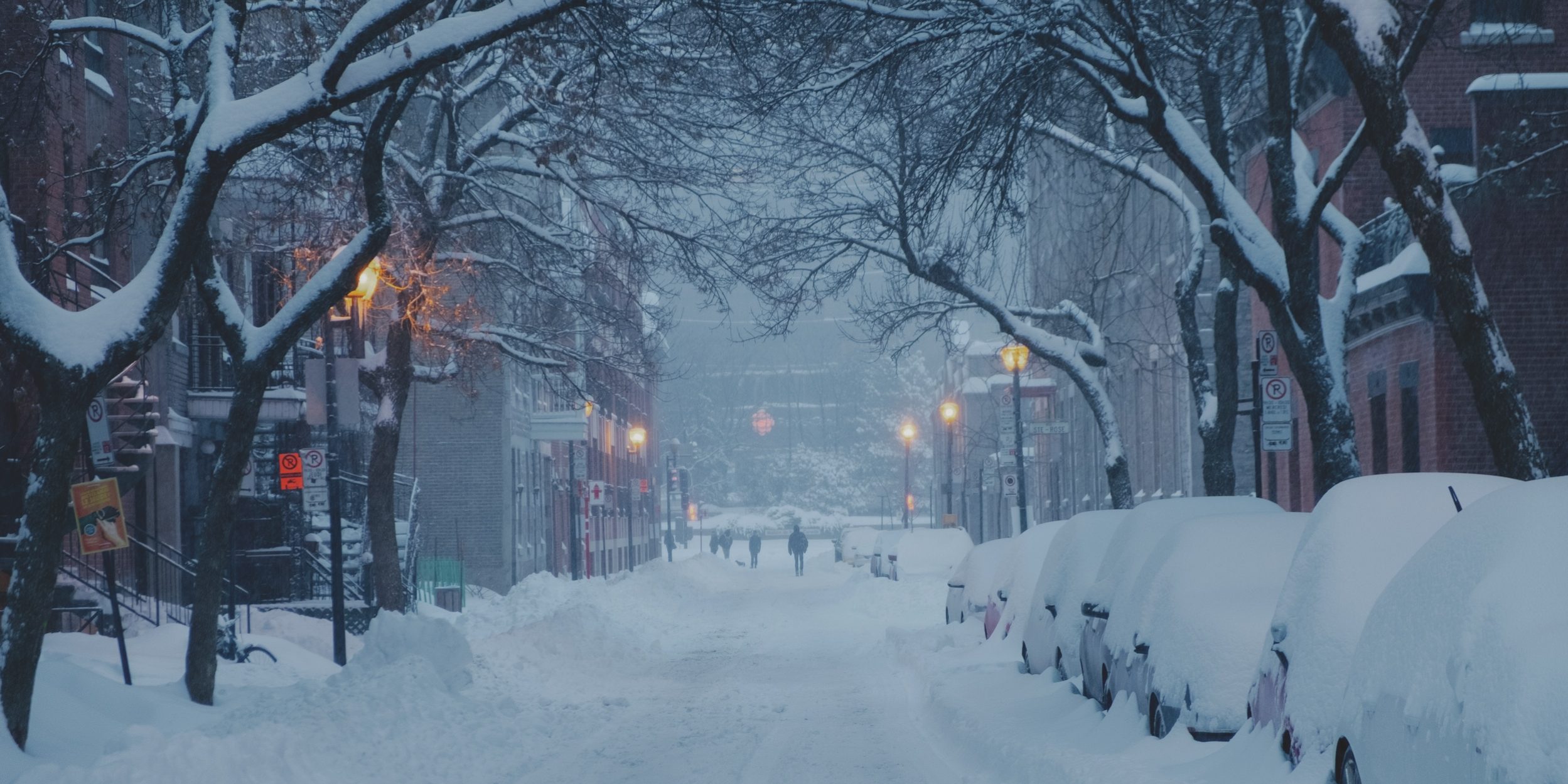
“We will not leave.”
Jacques Brault
Every year, in Quebec, as in other northern territories, winter returns with its biting cold, shorter days, slippery streets, and snow-covered silences. And while it’s part of a natural cycle, it’s rarely greeted with indifference. Because beyond a simple change in temperature or scenery, winter has a profound effect on us. It disrupts our habits, slows down our rhythms, and shakes up our relationship with time, space, others, and—above all—ourselves.
For a few weeks, and sometimes even a few months, major cities such as Montreal, New York, and Berlin are covered in a blanket of white that erases straight lines, visual landmarks, and well-regulated schedules. Everything that was once taken for granted suddenly becomes uncertain: transportation is delayed, sidewalks become impassable, and parks are closed. In 1971, Quebec poet Jacques Brault wrote in La poésie ce matin this simple yet powerful verse that perfectly summarizes the foundational ordeal of winter and the cold: “we will not leave.” Despite the frost, the constraints, the wind, the darkness, and the seasonal isolation, we can draw a quiet yet strong power from winter: despite, thanks to winter, “we will not leave.”
However, while cultural representations of winter refer almost exclusively to outdoor landscapes, it’s during this season that we spend the most time indoors: we observe the first snowfall through the window on a December morning; we change our diets, our habits, our wakeup and bedtimes, our athletic activities, even our social relationships. Sometimes, people also take advantage of the cold weather and the winter to engage in outdoor activities. But compared to the other seasons, winter is primarily a season experienced inside, hence the importance that Nordic peoples place on the layout of their homes, their lighting, and their openness toward the blue, white, and purple landscapes recreated by the effects of snow.
Winter and its two essential components—coldness and darkness—also act on another, more subtle level: they force us to confront immobility, withdrawal, and silence. They force us to slow down and sometimes even stop. In our societies marked by urgency, efficiency, and performance, this suspension is often seen as a form of disorder, even a threat. Winter therefore disrupts an established order: that of schedules and performance. However, this disruption carries something else with it: a different time, a sense of interiority, a form of simplicity conducive to reflection, creation, and listening. This is what many people feel after the first snowfall: a gentle dizziness, a return to childhood, as if the world suddenly took a break.
However, this feeling doesn’t last. Because winter, when it stretches out, becomes hard to bear. It can darken the mood and generate widespread fatigue and a lack of motivation. The lack of light affects our biology; the cold weather encourages us to stay inside longer, which sometimes leads to isolation. The city, once the magic of the first snowflakes has passed, is covered in grey, wet snow, and hazards. It becomes harder to go out, see each other, and sustain momentum. For people who live alone or in a vulnerable situation, this forced withdrawal can result in deep loneliness. This is also what is conveyed by the French word “hivernité,” coined by geographer Louis-Edmond Hamelin: a state, an ambiance, a way of experiencing winter that shapes behaviours, social relationships, and emotions.
However, some cultures have made this ordeal a strength. The Nordic peoples (including Quebecers) have long developed strategies for taming this season. In Scandinavia, for example, light becomes an art form; indoor conviviality, a form of gentle resistance to the darkness outside. We light candles, we slow down our schedules, and we accept the idea of living differently. Winter is no longer a season that we have to struggle against, but a time that we must learn to get through—and even, sometimes, to love.
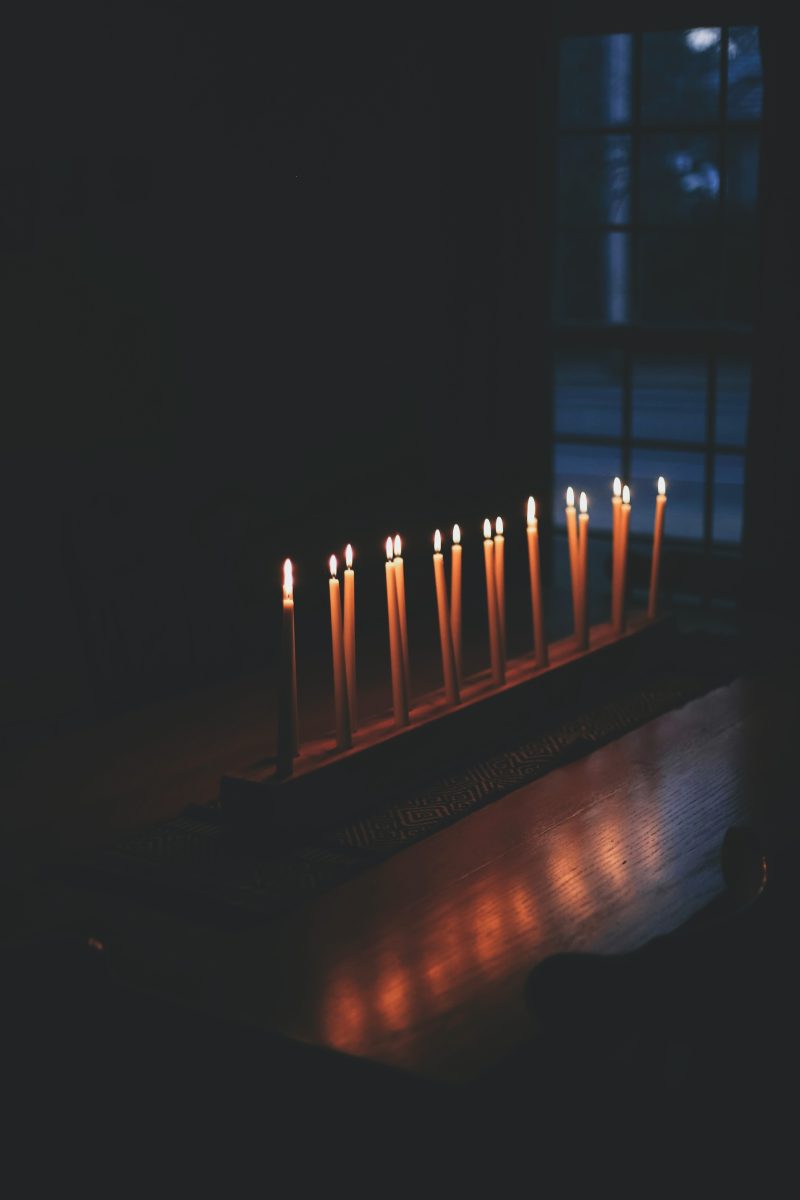
Photo : © Jessica Fadel
However, it’s not an easy path. Winter is an existential ordeal. It brings us back to our finiteness, to our need for warmth, closeness, and comfort. It forces us to organize our lives differently, acknowledge our limitations, and deal with what we can’t control. And yet, it can also be foundational. Those who “stay the winter,” who choose not to escape to milder climates, ultimately develop a sense of pride, an inner strength. This experience is existential and leads to a deep rootedness. Author Dany Laferrière humorously wrote in 1994: “The biggest enigma is the fact that people agree to spend their whole lives in this climate when the equator isn’t too far away.” It’s true that remaining in a cold country, despite the difficulties that the climate imposes, ends up leading to a surprising pride—that of resisting—which deeply marks and defines Quebec identity. With its constraints, silences, and slowness, winter eventually carves out in us a space of grounding, calm, and sometimes even resilience.
THE COLD AS A PHYSICAL DEMAND
Cold weather isn’t just a piece of meteorological data: in the winter, it’s a daily constraint. When the temperatures drop, the human body enters protective mode. The simple act of going outside requires planning. This permanent, often invisible vigilance can become exhausting, especially when it extends over several months.
In some Nordic cultures, there is a saying that there is no bad weather, only bad clothes. But beyond this maxim, it should also be recognized that not everyone has the same resources to deal with the cold. Winter exacerbates inequalities: it isolates, makes vulnerabilities visible, and highlights discomfort or insecurity in housing, mobility, and social ties.
Ultimately, the cold forces us to confront our vulnerability. It reminds us that comfort is never a given, that our bodies have limits, and that in order to live in harmony with a winter environment, it’s necessary to adapt not only physically, but also mentally and emotionally.
DARKNESS AS A NEW ORDEAL
In Nordic regions, and especially in Scandinavia, the winter darkness can last for weeks, even months, with sunlight limited to just a few hours per day, or sometimes even non-existent. While the variation in light is more nuanced in Quebec due to its more southerly geographic location, for many, darkness remains one of the dominant characteristics of winter. This prolonged darkness takes its toll on the body and mind. Many studies have shown that a lack of natural light can affect mood, concentration, sleep, and even physical health. Disorders such as seasonal depression affect a large number of people, particularly between November and February. The circadian rhythm, which regulates sleep-wake cycles, is profoundly disrupted by the absence of light cues.
It therefore becomes harder to wake up in the morning and maintain consistent energy levels and stable motivation on a daily basis. This slowdown is also sometimes poorly perceived in societies that value efficiency, movement, and productivity. It can lead to a form of guilt: feeling “less functional” in the winter, whereas in reality, the body and mind simply need to adjust to demanding conditions.
Nordic societies have developed different strategies to adapt to this reality. The use of light therapy, for example, is common in households and workplaces. The importance placed on interior lighting is also revealing: soft, warm, often indirect light is favoured to create a feeling of comfort and well-being. Social life also adapts: quiet moments, indoor activities, reading, cooking, and gatherings in small groups are valued. Some people even go so far as to redefine their schedules in the winter, prioritizing rest, reading, or contemplation.
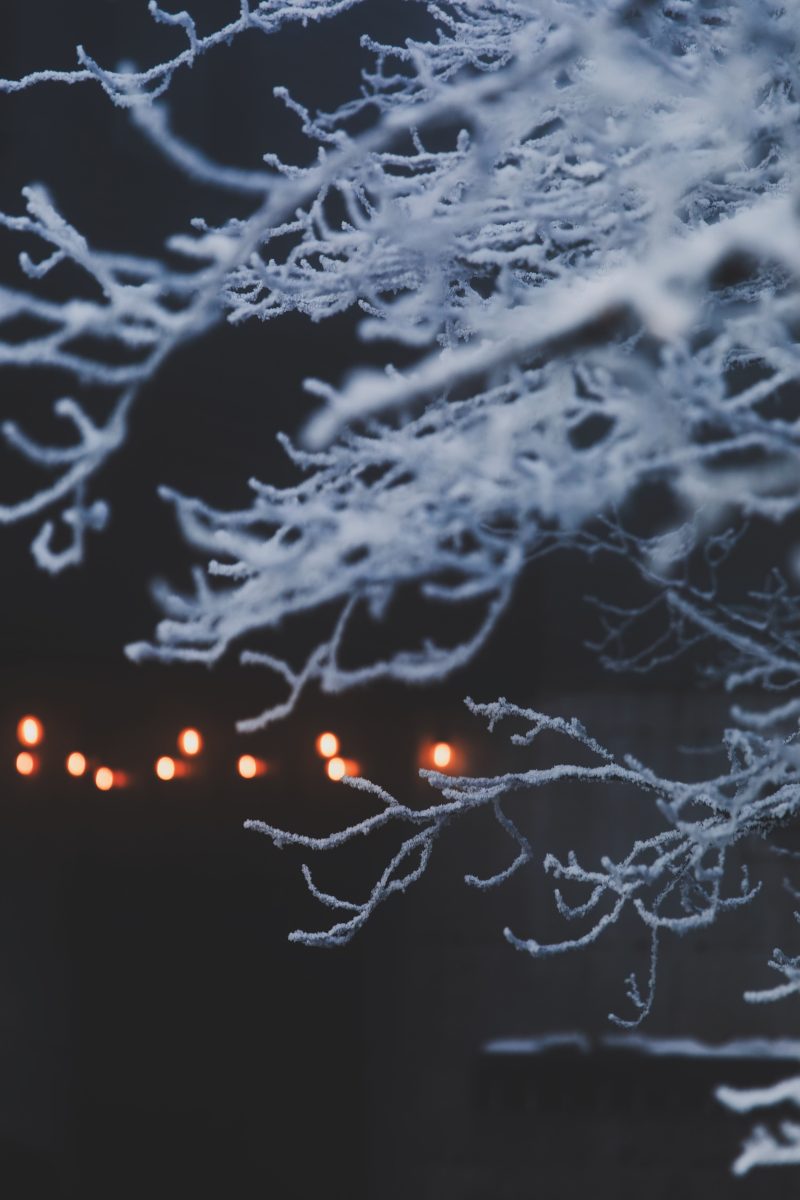
Photo : © Bianca Des Jardins
WINTER AS A LUMINOUS ORDEAL
Winter is certainly a demanding season, and those who experience it every year know how much it puts the body, mind, and daily organization to the test. And yet, at the heart of this season, forms of resilience, solidarity, and chosen slowness are also created.
Rather than treating it like a struggle or something to flee, “staying the winter” can become a learning opportunity, a way to anchor ourselves in an environment and respect it. A way of experiencing time differently and listening to ourselves better, quite simply.
[1] Brault, J. (1973). La poésie ce matin (p. 29). Parti pris.
[2] Laferrière, D. (1994). Chronique de la dérive douce (p. 110). VLB éditeur.
FURTHER READING
Borm, J. and Chartier, D. (2018). Le froid. Adaptation, production, effets, représentations. Presses de l’Université du Québec.
Chartier, D., Lund, K. A., and Jóhannesson, G. T. (2021). Darkness. The Dynamics of Darkness in the North. Presses de l’Université du Québec, Imaginaire | Nord, and University of Iceland.
De la Soudière, M. (2016). Quartiers d’hiver. Ethnologie d’une saison. Créaphis.
Hamelin, L.-E., Chartier, D., and Désy, J. (2014). La nordicité du Québec : Entretiens avec Louis-Edmond Hamelin. Presses de l’Université du Québec.


