


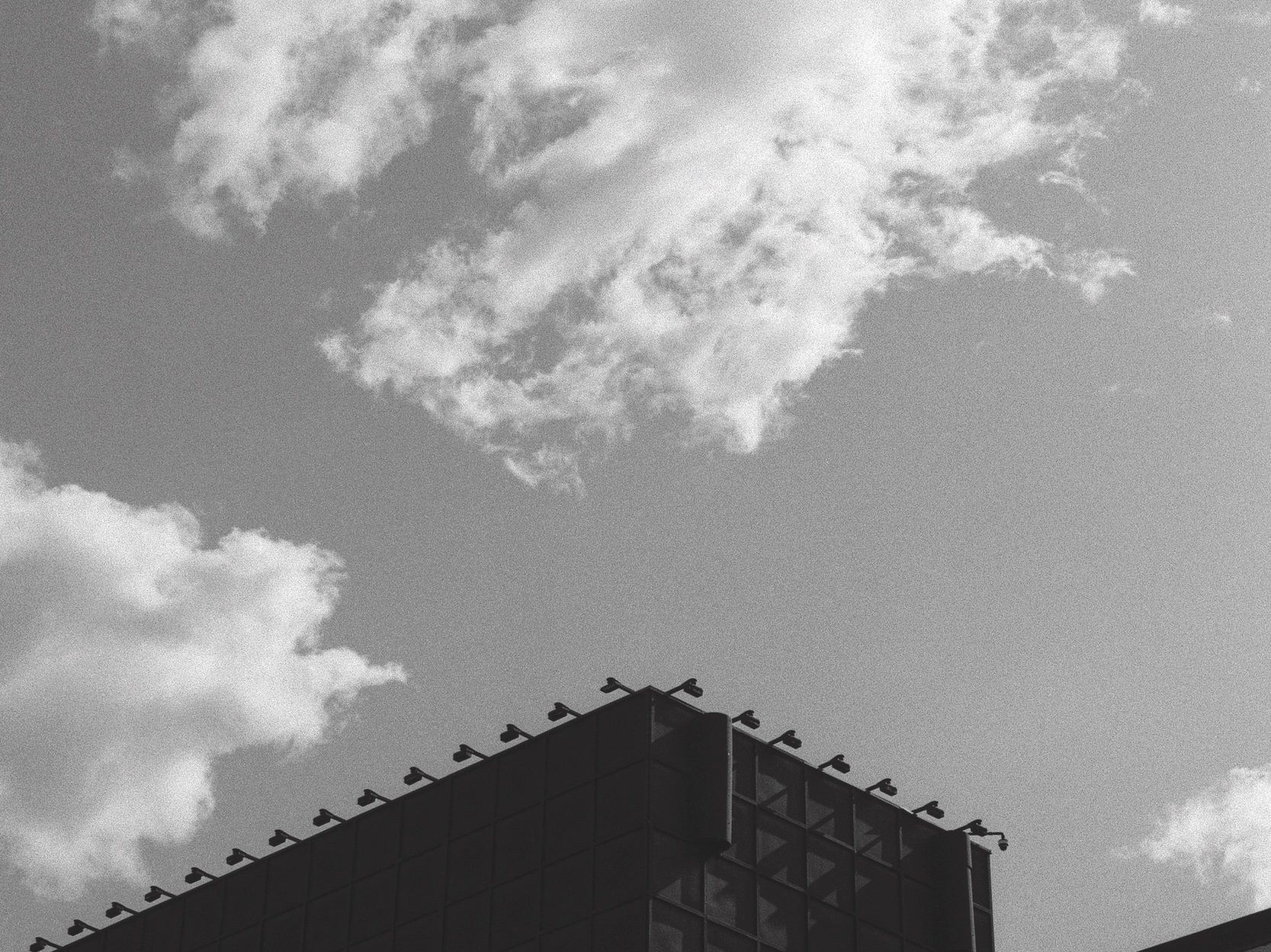
There’s a demand for perfection in the air of time, a relentless pursuit of novelty that sometimes leaves us breathless. Propelled by the endless scrolling of impeccable interiors on our screens, a desire for perfection and uniformity sets in. This race for the “all new, all clean” pushes us to polish our own lives, our own spaces, to the point of erasing all traces of the passage of time. In this whirlwind, our interiors and our cities risk losing a part of their soul and that warmth that can only emerge from wear and tear, as well as memories. In the face of this pressure, a need for slowness is felt; the need to rediscover places that allow us to be surrounded by a beauty that has simply had the time to mature.
WEAR AND TEAR AS LIVING MEMORY
Like a giant pendulum, “good taste” swings from one decade to the next. What was once the height of chic becomes outdated today, before perhaps being reborn as “vintage.” This dance of the fashions is natural, but our era has accelerated it to the extreme. The fear of being left behind has become a powerful driver for consumption, which, in architecture, translates into a frenzy of renovations. Bold wood panelling and textured ceramics are torn out to erase the character of an era deemed “ugly.” More often than not, these noble materials are sent to the dump to be replaced with cheap plastic materials.
This cycle is nothing new: the playful exuberance of the post-modernism of the ’80s was a response to the sometimes-cold functionalism of the modern movement. Then, the pendulum swung back toward a sleek neo-modernism. In the midst of this back-and-forth approximately forty years ago, while the modern icons were being demolished, movements such as DOCOMOMO (Documentation and Conservation of the Modern Movement) emerged to protect these buildings with a recent history. Today, history is repeating itself, both here and internationally, as neo-modernism is showing signs of running out of steam and the great icons of post-modernism are falling under the wrecking balls of the demolition crews. The question arises: will a “DOCOPOMO” emerge just in time for us to realize the value of what is disappearing? Could we thus avoid regretting, once again, having erased the richness of our own history?
“Could we thus avoid regretting, once again, having erased the richness of our own history?”
THE EXAMPLE OF THE MAC
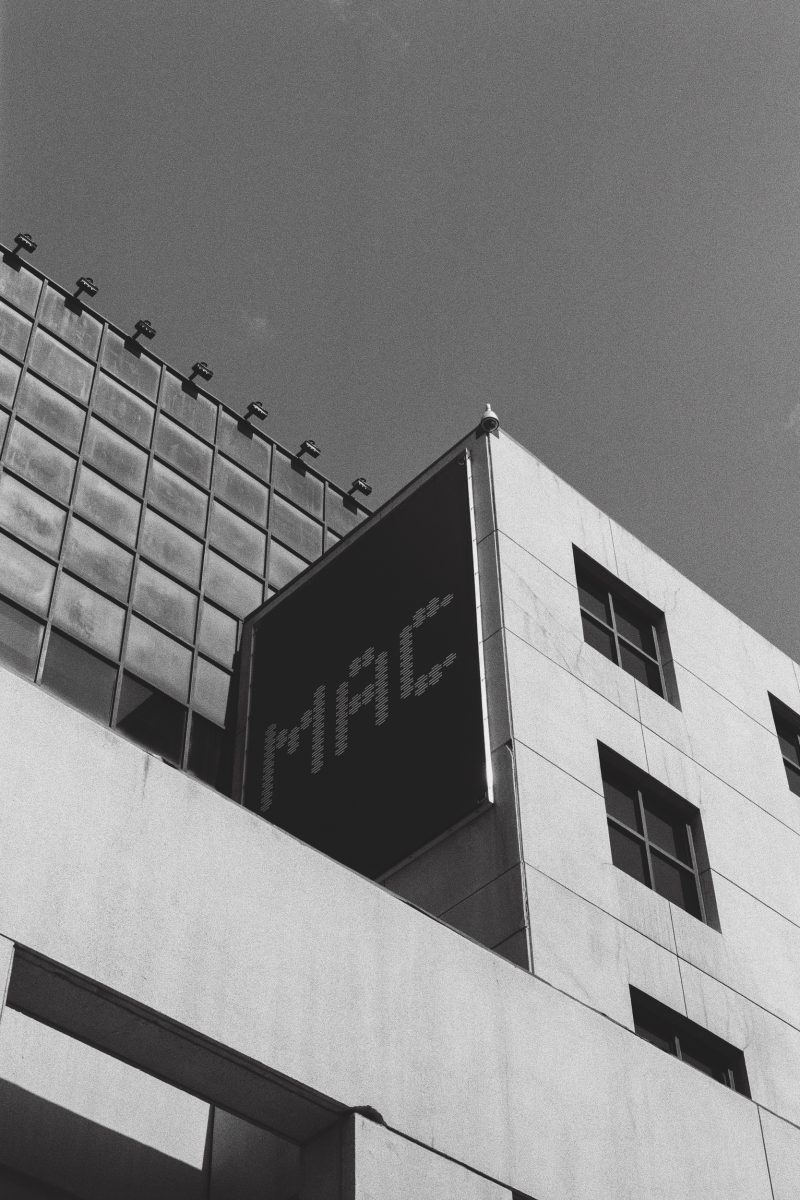
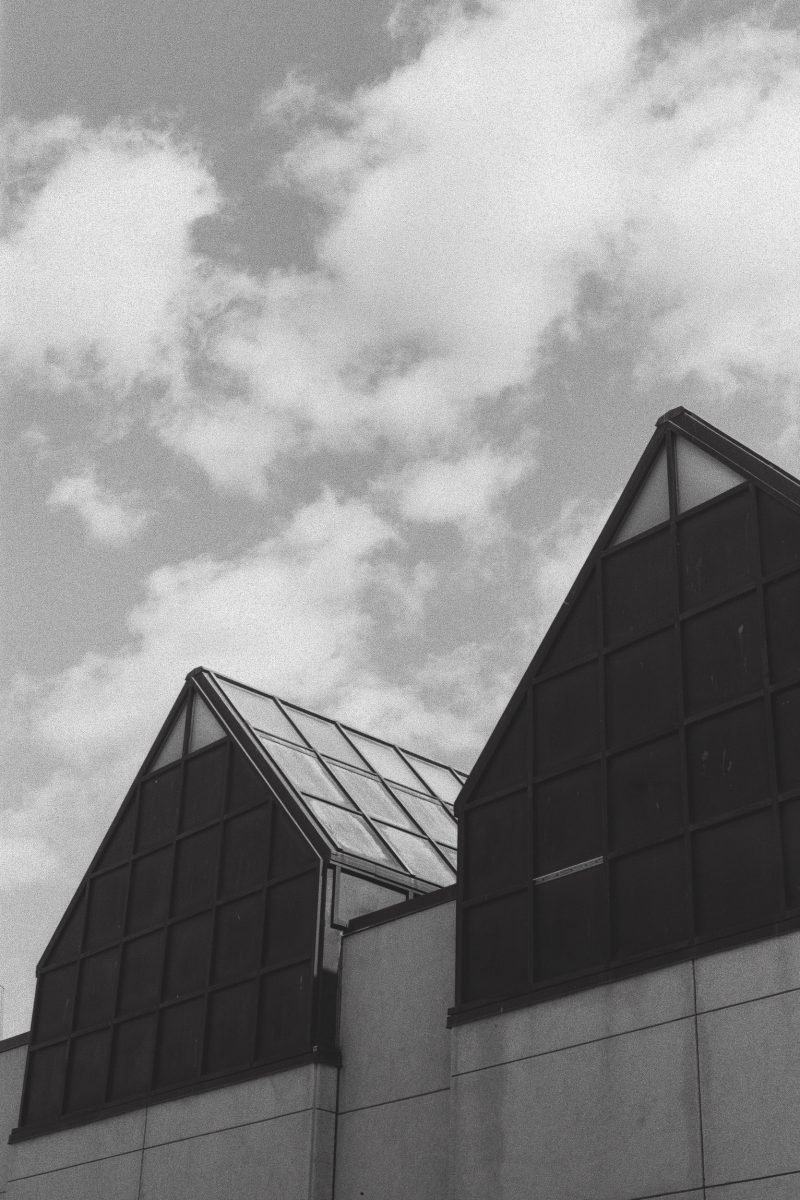
The Musée d’art contemporain de Montréal (MAC) was one of those places with a strong, almost stubborn personality. For 30 years, it offered itself up as a condensed version of the urban landscape in the heart of the Quartier des spectacles. Like a collage, its volumes assembled the archetypal forms of the city: house gables, a rotunda, a colonnade, and checkered volumes reminiscent of a skyline. An omnipresent square motif tied it all together, from the grid of the façades to the skylights, in rhythms, shapes, and materials that echoed the palette of the Place des Arts. The whole design formed a spectacular backdrop to the city’s major festivals, a sort of staged urbanity. Culminating in Geneviève Cadieux’s luminous work The Milky Way, which takes the form of a billboard, the perspectives offered on the MAC were not afraid to be playful and expressive.
Although necessary on the technical level, its current transformation illustrates this desire of our era to sand down the rough edges. By demolishing elements as iconic as the rotunda and the gabled façades, a large part of what gave the MAC its originality is being erased. Its textures are replaced with a more discreet elegance, a layering of smooth glass prisms which, although understated, seems to interrupt the dialogue carried on by its predecessor. While the original MAC had been able to integrate itself into its context despite its distinct style, the new project seems to detach itself from it.
This solution seems to reflect the exhaustion of a neo-modernism which had become too easy of an answer, like a proliferation of minimalist Apple Stores. This is an international aesthetic, poorly suited to our climate and sometimes indifferent to its environment, which has lost its innovative nature through repetition. Without judging the final quality of the project, which is still under construction, one can nevertheless feel a sense of nostalgia for what is slowly being torn down before our eyes: not just a building, but a fragment of our collective memory.
The cost of this forgetting is higher than it seems, and the case of the MAC is not an isolated one. Diagonally opposite, the rhythmic and colourful façade of the Théâtre du Nouveau Monde, created by Dan Hanganu, has also given way to a more generic and monochrome cube. The lantern roof, in the shape of an open book, which covered the theatre’s restaurant, has been permanently extinguished, and with it, a small part of what gave this historic neighbourhood its festive atmosphere.
CULTIVATING CURIOSITY
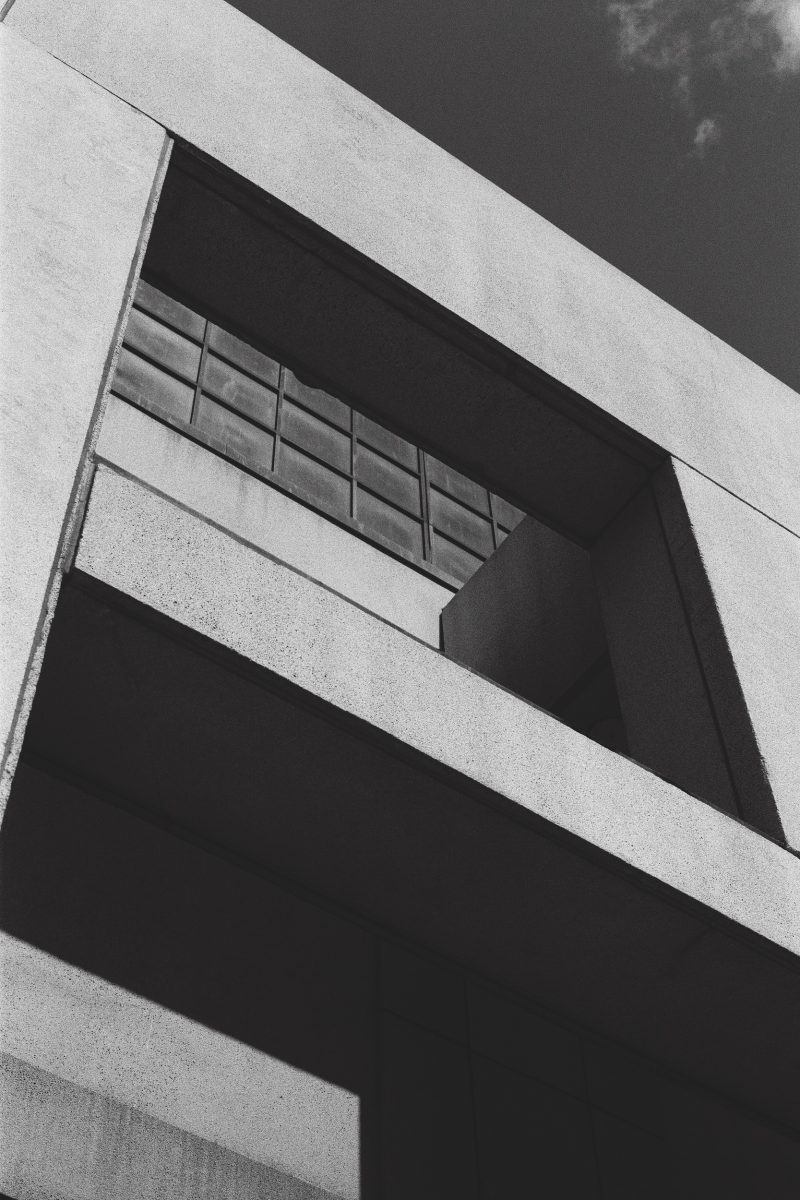
By making our cities more uniform and systematically replacing what is outdated with a generic minimalism, we are impoverishing our daily environments. Here and elsewhere, we are losing the diversity of styles that makes a walk through the city so stimulating, and we are erasing layers of architectural history. The question of recent heritage then arises acutely: when does a building cease to be simply outdated and become a landmark worth preserving?
Cultivating a fresh perspective on what is currently considered “ugly” can be challenging, but it can also fuel small revolutions. It’s a matter of learning to see the sleeping beauty that is hidden in what surrounds us. It’s about choosing to repair rather than replace, to rediscover rather than reject. It’s a form of benevolent curiosity that invites us to slow down and appreciate the depth rather than the surface, because a place that has a history helps us build our own. By taking the time to fall back in love with our spaces, we are not only preserving the past; we are also giving ourselves a richer present and a more sustainable future.
“A place that has a history helps us build our own.”
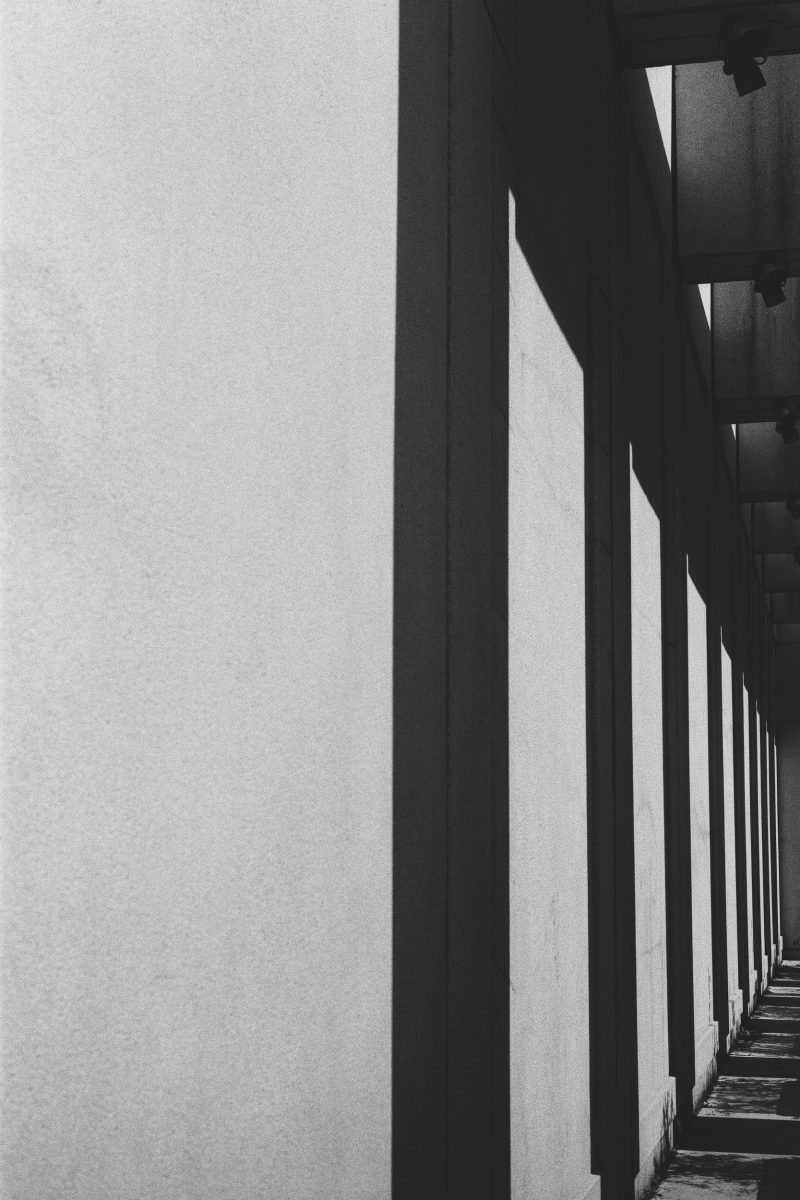
Photos : © Justine Dorval
Sources
Chupin, J.-P. (2018, April 17). “Un modernisme élégant au secours d’un postmodernisme désuet.” Catalogue des concours canadiens. https://www.ccc.umontreal.ca/fiche_concours.php?lang=fr&cId=497
Hénault, O. and Vanlàthem, F. (1984). “Le concours du Musée d’art contemporain : un constat.” Section A, 2(2), 10-17.
Mortice, Z. (2024, May 20). “Revisit: James R Thompson Center in Chicago, US” by Helmut Jahn. The Architectural Review. https://www.architectural-review.com/essays/revisit/revisit-james-r-thompson-centre-in-chicago-us-by-helmut-jahn
Saraniero, N. (2024, January 26). “New Yorkers Mourn the Loss of 60 Wall Street Atrium with a Funeral Procession Through Manhattan.” Untapped New York. https://www.untappedcities.com/60-wall-street-atrium-funeral/


