


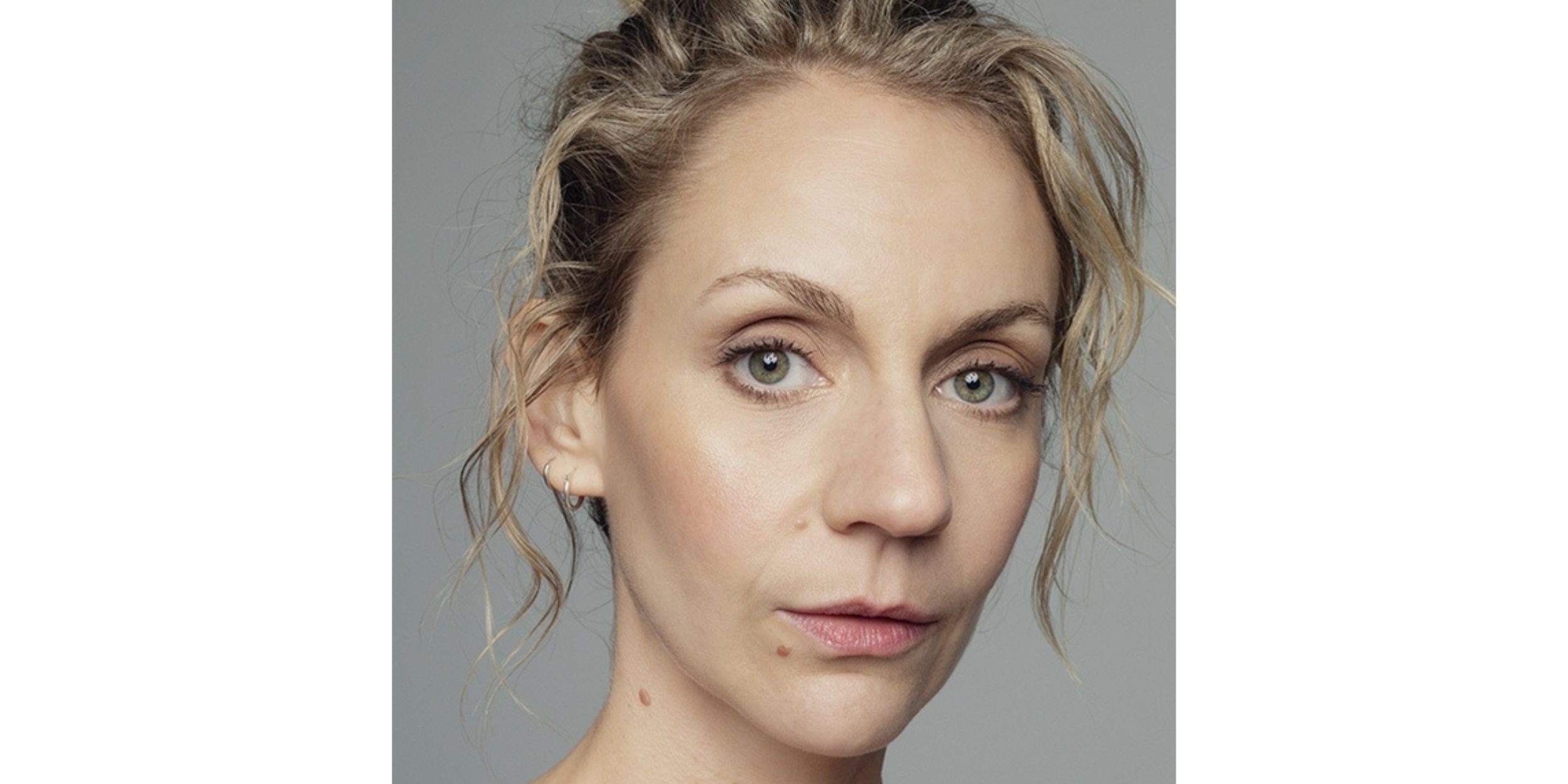
Navigating between public and private life can be a real challenge, especially for those who live life in the spotlight. Léane Labrèche-Dor, an actress and host, shares her thoughts on this duality, the precarity of the profession, and the challenges of being perceived as “the daughter of…”. She also opens up about her mother’s illness, a significant period during which she took on the role of caregiver. A meeting with an inspiring woman, at once anchored in the present and nourished by her past.
Hello, Léane. The Labrèches have been part of the Quebec media landscape for several decades. Your father is Marc Labrèche, and your partner is actor Mickaël Gouin. So, there’s a very public aspect to your life. Where do you draw the line between public and private life?
“In several respects, the public aspect isn’t ‘real.’ The sketches I do with my father, I approach them as if we weren’t from the same family; otherwise, I feel like I’m going against what I’ve set up. I did theatre school to earn my place in the field. And for a long time, my plan definitely wasn’t to become an actress. Even after theatre school, I didn’t want to work with Marc. It took a lot of thinking and discussion. I was afraid of being told that I was only there because I was “the daughter of…”. I still get told that today. Unfortunately, I can’t control that, so all I can do is give it my best.”
How do you perceive longevity in the profession?
“I find it precarious. You can give 110% all your life and suddenly see your career end without knowing why. It’s not what we want to hear, but timing also has a lot to do with it. I often talk about this with Marc, who already finds himself a has-been and is trying to reinvent himself as best he can.”
“When I started practicing this profession, he was already wondering how to make it last. Do we have expiration dates as artists? We evolve in an era. If the era changes, are we still relevant? I think art can make you think, can do good, but it needs to be in synchronicity with people’s wants and needs. These considerations made me understand that I can’t get up in the morning and aspire to do this job for the rest of my life.”
Your mother had cancer and passed away when you were in Secondary V. How did that shape that period of your life?
“She was diagnosed when I was in Secondary II. Fortunately, I didn’t have too many challenges at school; I was very studious. The ordeals I went through at home therefore didn’t affect my academic career too much. I even finished the year with honours (laughter)!
That experience shaped me. It taught me to want to become a good adult, as I never could have learned at school. It empowered me. It taught me resilience. It taught me kindness. It taught me patience. It taught me determination. I’m much more equipped and much sharper as a human today.”
What was your role as a caregiver to your mother?
“At the time, I wasn’t aware of being a caregiver. I was a presence; I gave her love. I cooked; I skipped school in the afternoon to go to the grocery store so I could make dinner in the evening. I took care of her; I was the one who shaved her hair. I accompanied her to certain treatments; I read gossip magazines with her, just to take her mind off things. The little foot massages go a long way, too! I took care of her, ultimately.”
What was your mother like? What memories do you have of her?
“I never know if my memories are faithful or if they’re embellished by the fact that they’re frozen in time and by the love I have for my mother, who has remained in the past, but what I remember is a very headstrong woman (laughter). I also think that’s part of the reason why she got sick, from wanting to do too much.
I found her brilliant, too. She didn’t have much education, but she got by in life. She was very human, very attentive. Attentiveness is one of the most beautiful qualities a human being can have, and as a parent, even more so. She was lively, curious, funny; a partier, a traveller.”
Are you anything like her?
“Yes, and having children makes me notice just how much. The stubborn side, my tendency to put others first… Everything she needed to work on, I need to work on!
My mother was my best friend. I had been arrogant and ungrateful at times, like all children, but there was a partnership between her and I that was greater than what I saw with my friends and their mothers. And it’s also true with my father. I don’t know why, but my brother and I are very close with our parents.”
What is your relationship with femininity? Did you want to be a boy for a long time?
“Yes, I tried to pee standing up for a long time (laughter). I was proud to play soccer with the boys and fight with them. I liked that.
I think that inclination was passed down to me by my mother. She was 5 foot 1 and weighed 103 pounds, but she drove trucks, she ran the show, and she was the only girl in a family with four children. She always wanted to prove herself and be stronger than the others. She had a drive that fit well in another era of feminism.
With hindsight, I realize that what made the boys at school respected and seen as cool were things that I was naturally closer to than what the girls were respected for. I wasn’t the prettiest, I wasn’t the best dressed… I told myself I had a better chance of fitting in with the group of guys, with my broad shoulders from swimming and gymnastics.
Today, I no longer agree with that idea of comparing myself to men. Glorifying the distinctive traits in the men around me and trying to reproduce them as a woman only creates a form of internalized misogyny.”
When did you start to embrace your femininity?
“At age 29. It’s pretty recent. I have to tip my hat to my boyfriend, who worked very hard to make me understand that it had to start from inside me. He was the first person to tell me: ‘When you don’t second-guess yourself and you present yourself in a way that you find beautiful, going by feeling, you’re more beautiful than many people.’ He made me realize that when I was trying to fit in based on what I thought others expected of me, that never served me well.
Becoming a mother also reconnected me with what was most important to me. Motherhood remains an ordeal, but it’s no less bright because of it.
Giving birth made me realize that my body has no limits. There’s a feeling of absolute power that comes with it which is very liberating. No one can take that away from me, and I can’t take it away from any other mother or any other woman. Women’s bodies have immense potential, whether or not we take steps toward motherhood. We’re stronger, more tolerant, more resilient than many things in this universe.”


