


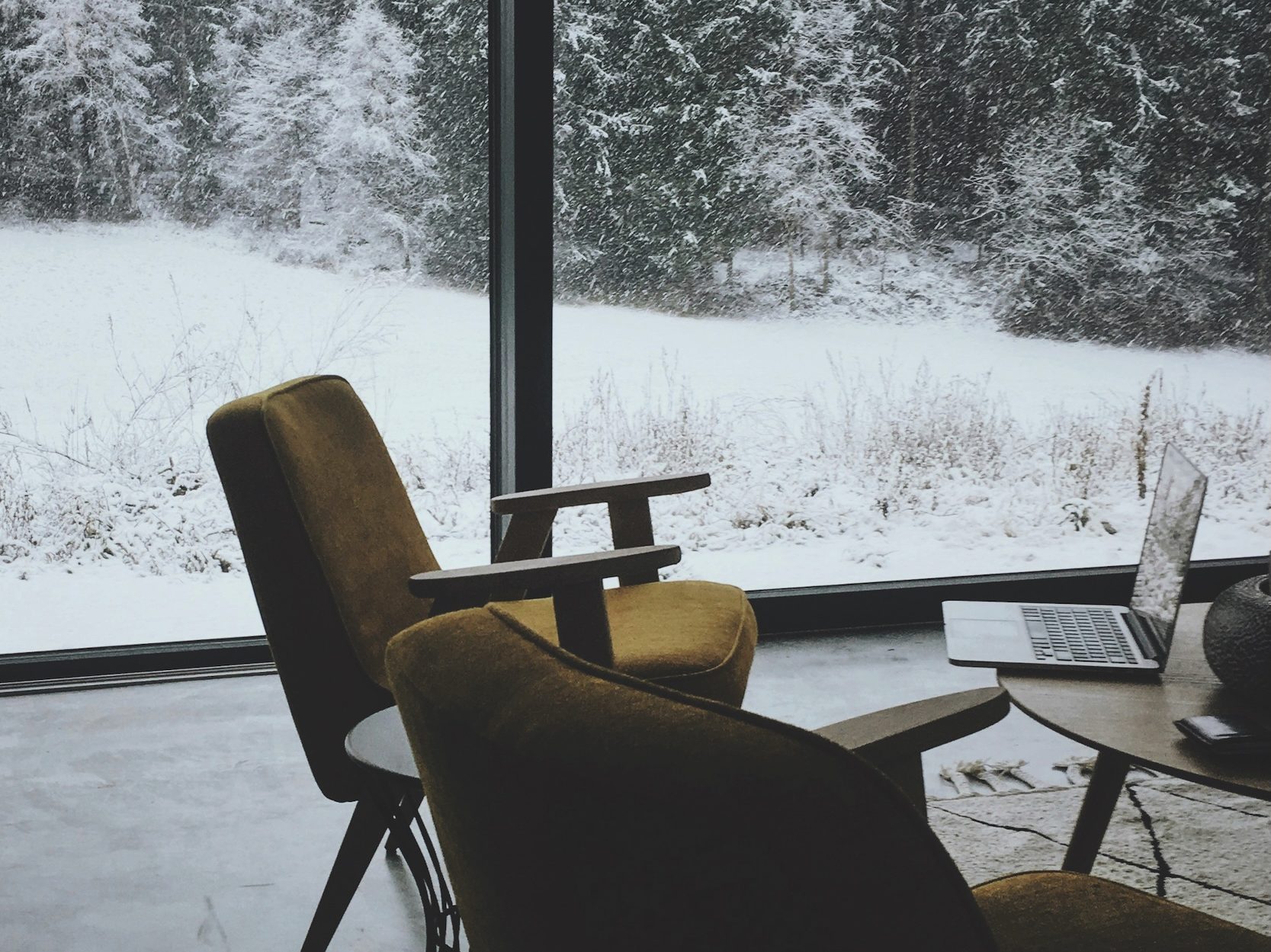
Whether born here or adopted by us, we Quebecers spend an average of 90% of our time indoors, according to the Institut national de santé publique du Québec. By choice, perhaps; by necessity, certainly. Here, winter is a moment in suspense. It pushes us to take shelter from the elements while waiting for spring to bestow its gentleness on the frozen landscape.
In this snowy interlude, our living space becomes a source of comfort that allows body and mind to slow down and find calm. It’s a refuge where you can breathe, a sanctuary where the everyday hustle and bustle temporarily stops at the doorstep. That, at least, is what we aspire to, because sometimes harmony is lacking. An imbalance sets in where tranquillity is expected, without being able to identify the cause. Faced with this silent chaos, different approaches—such as the psychology of space, neuroarchitecture, environmental ergonomics, or feng shui—can help us find a certain serenity.

Photo : © Claus Grünstäudl
TAKING OWNERSHIP OF OUR SPACES
Among these different methods, neuroarchitecture and feng shui stand out in particular for their holistic approach, as well as for their concrete tools aimed at restoring an interior conducive to physical and emotional well-being. The former is a relatively new concept that links architecture and personal growth by studying the way in which our habitat can influence our brain, emotions, and behaviour; the latter is an ancient Chinese art that advocates for the balance of energies and their proper circulation in a space to improve our quality of life. The furniture and objects that fill our daily lives, as well as the sources of light, colours, shapes, sounds, and materials that define each room, actually exert a considerable influence on our well-being, our mood, our energy, and even our feeling of control and safety, without us necessarily even realizing it. “This is what makes design so important in our lives: it acts to help us feel good,” emphasizes Marie‑Michelle De Lachevrotière, interior design manager at Strøm Nordic Spa.
When chaos reigns, when a room is cluttered or disorganized, the mind struggles to find the necessary serenity to calm itself. Over time, the décor also tends to fade away and become a secondary element in our lives. We no longer see the shoes strewn across the doormat, the chipped vase on the coffee table, or the painting patiently waiting on the dresser to be hung. The objects seem frozen in place, the furniture becoming more firmly rooted year after year. To break the status quo, it’s necessary to inhabit the place, experience it, and re‑tame it in order to become fully aware of the place of each item, measure its impact, and question its purpose.
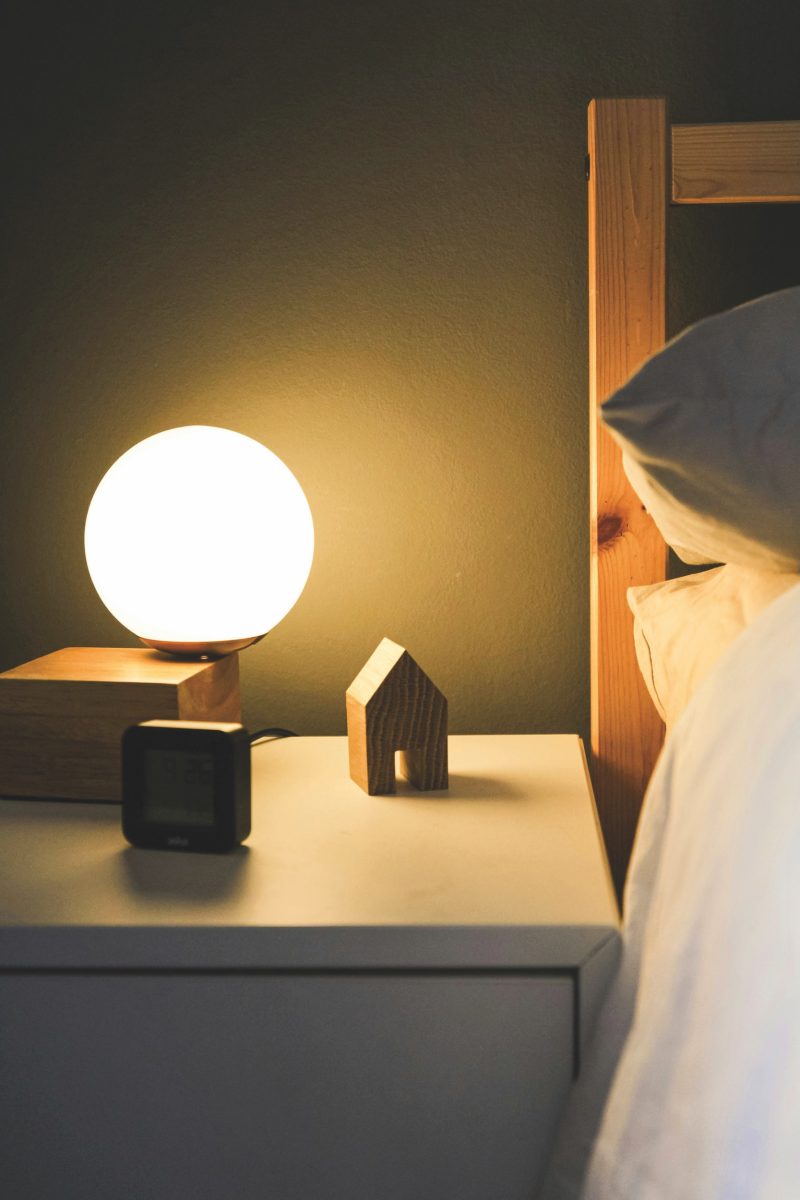
Photo : © Julia Beazy
THE POWER OF NATURE
Studies prove it: nature—the central pillar of both neuroarchitecture and feng shui—is an essential element of our well-being, because it helps reduce stress and cultivate a soothing atmosphere. It enters our living space through natural light, plants, a bucolic view, or even a panoramic wallpaper. Opting for raw materials also allows it to be integrated “in coherence with the natural environment that surrounds us,” as suggested by Florence Goulet‑Pelletier, interior designer, project designer, and associate at ISSASTUDIO, a Montreal firm focused on biophilic design. This discipline, which aims to reconnect humans with nature in all its diversity, is also one of the fundamental principles of neuroarchitecture.
Immersing ourselves in the living world and praising the forests and mountains that surround us in a responsible and authentic way by selecting warm and noble materials are all ways that help us refocus and find inner balance. In this desire to prioritize our local natural surroundings, maple and oak are prominent, especially in our furniture, as is natural stone, which is reflected in the use of granite, quartz, or ceramic.
AN INNER DIALOGUE
Natural light is a preferred element, but it’s not enough, according to feng shui. This ancient art recommends having three to five soft and indirect sources of light in each room, whether it’s light fixtures, candles, or mirrors, in order to create a warm atmosphere.
In terms of colours, feng shui and neuroarchitecture move away from white to favour a more nuanced palette reminiscent of the chromatic richness found in nature. Delicate shades of green and blue soothe the mind, as do enveloping earth tones. “It’s necessary to select and balance the colours, shapes, and materials according to a given space in order to bring it the desired energy,” add Aurore Dussaud and Margaux Hartpence, co‑founders of Montréal Home Design, an interior design studio that relies on feng shui to design aesthetic, functional, and harmonious projects.
In this constant quest for unity, the Chinese philosophy relies on five elements: wood, fire, earth, metal, and water. All these elements must be present in a room without any one element taking precedence over the others. Finding the right balance is complex and requires a deep understanding of the nuances of each of these elements. Wood, for example, can be integrated via a piece of furniture or a plant; fire, via a light fixture and warm colours. Earth, for its part, emphasizes shades of yellow, ochre, or brown, as well as angular shapes. Conversely, metal favours curves, as well as chrome, white, and light grey. Finally, water, a symbol of serenity, is manifested in particular through blue tones and mirrors. A dining room, where warm, friendly colours find their place, will not have the same requirements as a living room or a bedroom.
More than any other room, the latter must be a welcoming and comforting place conducive to relaxation and deep sleep. Natural materials, such as linen and wood, bring a sense of calm and softness, while round shapes foster a protective atmosphere.
For the rest, we trust ourselves with our eyes closed. Here, intuition must play a role, much as our desires and personal needs must guide us. “It’s essential to choose elements that represent us and correspond to what we really like,” according to Marie‑Michelle De Lachevrotière. “It’s important not to follow fashions or get carried away by trends, at the risk of creating an impersonal space. The design should reflect our identity and our values so that our home becomes a true sanctuary.” Our home should be like a cocoon, a chrysalis that reassures and protects us, a natural extension of our body and mind. Beyond the doorstep, every detail counts in making our living space a peaceful place, conducive to balance and well-being.


